8-Day Lhasa Tour with Everest Base Camp

Duration
8 Days
Trip Grade
Moderate to Strenuous
Country
Tibet
Maximum Altitude
5,150 meters (16,896 feet)
Starts
Lhasa
Ends
Kathmandu
Group Size
Up to 12 Pax (Standard)
Best Time
Spring (April to May) and Autumn (September to November)

The Lhasa Tour with Everest Base Camp takes you across the diverse geographical regions in just over a week. With over 10 years of experience, Adventure Trek in Himalaya successfully manages the complex logistics and physical acclimatization, ensuring a seamless trans-Himalayan excursion.

Your journey starts in Lhasa (3,650m) and crosses high passes like Gyatso La (5,248m). The route winds past Yamdrok Lake to Gyantse and Shigatse, reaching Rongbuk Monastery near Everest's North Face. To mitigate altitude issues, we advise resting at slightly lower intermediate elevations like Shegar before sleeping at Rongbuk's high altitude.

While Tibet’s highways are modern tarmac, the descent into Nepal is a stark contrast. After clearing Chinese customs at Kyirong, you will cross the Friendship Bridge to Rasuwagadhi. Here, the road becomes an unpaved, rugged track prone to seasonal disruptions. We utilize sturdy four-wheel-drive Nepalese vehicles rather than standard buses for this final, bumpy drive to Kathmandu.

If you are entering Lhasa from mainland China, we require your passport and Chinese visa copies at least 25 days in advance to secure the necessary Tibet Travel Permit and military clearance. This early paperwork submission guarantees that all high-altitude border checkpoints are passed without any administrative delays during your trip.

Contact our travel planning team today to secure your permits and begin organizing your classic overland crossing of the Himalayas.

Why Go on the Lhasa Tour with Everest Base Camp?

Starting your tour in Lhasa and driving out to Kathmandu offers a distinct set of advantages for travelers looking to experience the roof of the world.

Here are the main reasons to choose this route:

Gradual Altitude Adaptation: Flying to Lhasa (3,650m) and resting for three nights provides a safer physiological transition than driving up rapidly from Kathmandu. While many believe the Qinghai-Tibet train aids acclimatization, the cabins are oxygen-pressurized, meaning your actual adaptation only begins once you step off the train in Lhasa.

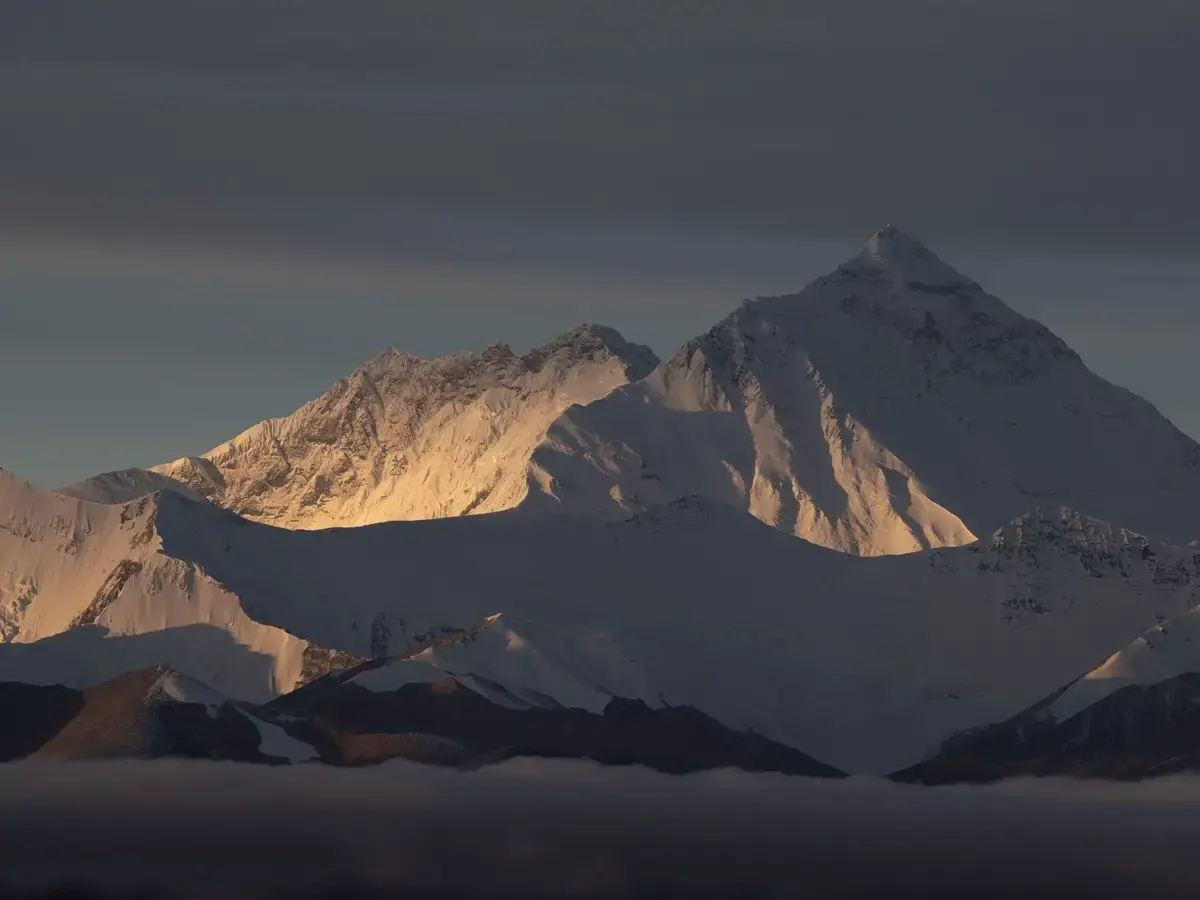
Direct North Face Access: Unlike Nepal's South Base Camp, which requires a multi-day trek and partially blocks views of the summit, the Tibetan side allows you to reach the Rongbuk area by vehicle. From the viewing area, which can be accessed via local electric eco-buses, the entire northern face of Everest stands clearly visible.

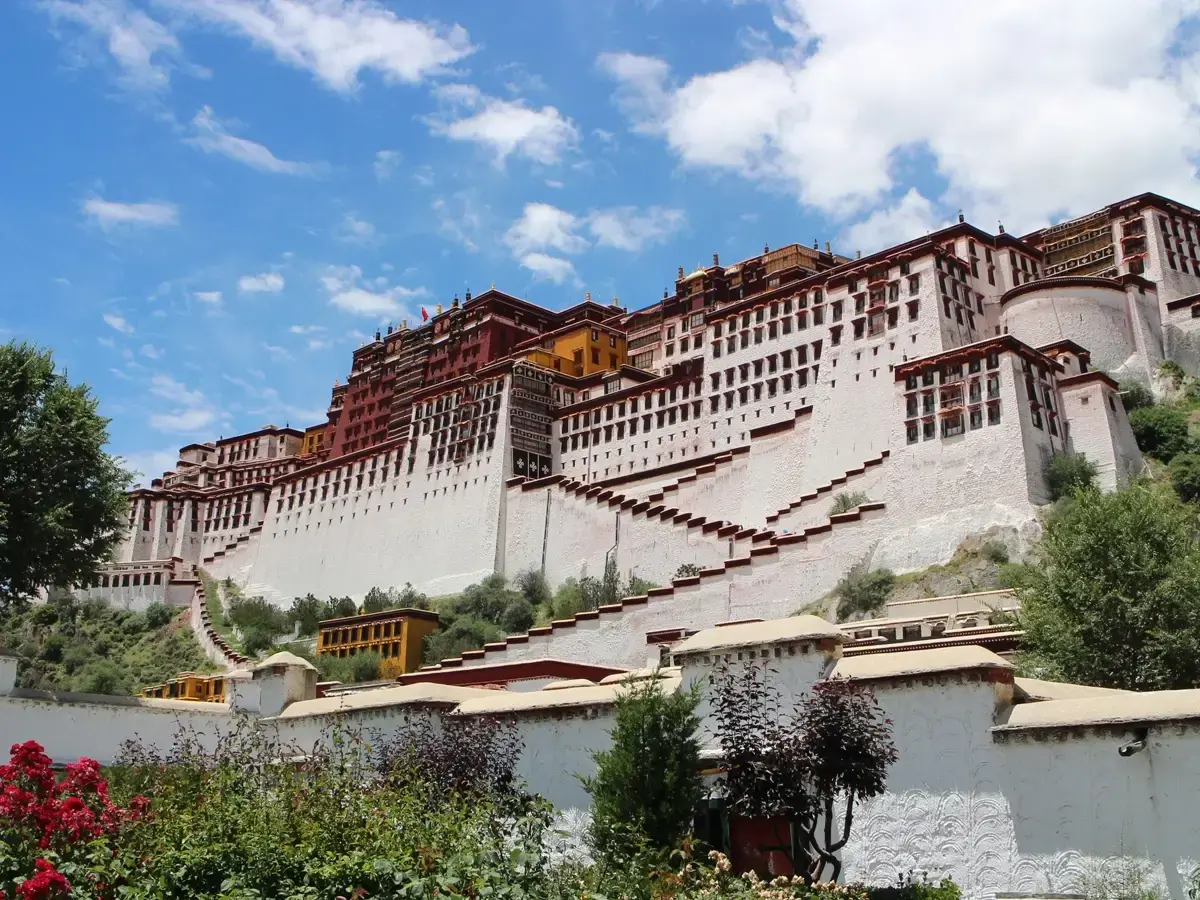
Cultural Immersion: This Lhasa tour route traces historical pilgrimage paths. You witness the scale of the Potala Palace and the active devotion at Lhasa's Jokhang Temple, progress to the multi-tiered Kumbum Stupa in Gyantse, and visit Tashilhunpo in Shigatse, experiencing the regional nuances of Tibetan Buddhism before descending.

Kyirong Gorge Descent: The geological shift is abrupt. Within a few hours of driving, you transition from the dry, rain-shadow Tibetan Plateau down through the steep, waterfall-lined Kyirong gorge into the subtropical climate of Nepal.

Typical Day during the Tibet Overland Tour

A typical day on the Tibet overland tour begins with an early breakfast at your hotel, usually around 7:30 AM, with the vehicle departure set for 8:30 AM. Considering the driving distances, early departures are necessary to ensure you reach your destination by late afternoon.

Temperatures on the Tibetan Plateau can change rapidly, especially when crossing high mountain passes. It is highly practical to keep a warm fleece or windproof jacket in the main cabin of the vehicle rather than in the luggage compartment, as you will want to layer up quickly during sightseeing stops.

During transit days, the tour stops at local towns or roadside teahouses for lunch. These simple eateries typically serve hot noodle soups, fried rice, fresh momos, and traditional sweet tea, which are perfect for warming up.

Most driving days bring you to your overnight destination by late afternoon. This gives you a few hours to walk around the local streets, visit markets, or rest. In the evening, you can enjoy a quiet dinner at your hotel or explore local restaurants with recommendations from your guide.

Lhasa Tour with EBC: Cost for Logistics and Permits

Lhasa Tour with Everest Base Camp is a multi-country excursion, requiring strictly regulated administrative procedures. To join this journey, travelers must obtain a Chinese Visa and a Tibet Travel Permit.

Because this overland route traverses restricted military border zones, we require clear copies of your passport and valid Chinese visa at least 25 days prior to your travel date to secure the Tibet Travel Permit and necessary military passes from the Tibet Tourism Bureau.

Our package price includes the processing of your Tibet Travel Permit and the Everest Base Camp Entry Permit. However, please note that the governmental Chinese Visa or Chinese Group Visa fees are not included, as these must be paid directly based on your nationality.

8-Day Lhasa Tour with EBC Highlights 2026/2027

  • Explore Lhasa's most iconic landmarks, including the majestic Potala Palace and the sacred Jokhang Temple.
  • Walk the busy Barkhor Street circuit alongside local pilgrims and devotees.
  • Drive along the shores of Yamdrok Lake, one of the three largest sacred lakes in Tibet.
  • Visit the historic town of Gyantse to view the multi-tiered Kumbum Stupa and Pelkor Chode Monastery.
  • Tour Tashilhunpo Monastery in Shigatse, the traditional seat of the Panchen Lama.
  • Stand before the north face of Mount Everest from Rongbuk Monastery, the highest monastery in the world.
  • Descend from the high, arid Tibetan Plateau into the lush, green forests of Kyirong.
  • Travel comfortably with a dedicated, professional English-speaking Tibetan guide and private vehicle transport.

Customized Tibet Overland Tour

This 8-day itinerary is structured to provide a balanced introduction to the cultural and natural highlights of Tibet. However, we understand that every traveler has unique requirements. The tour can be customized to start with an overland drive from Kathmandu to Lhasa, or you can extend your stay in Lhasa to take the scenic high-altitude train into mainland China.

Contact our travel team to discuss your plans, and we will gladly tailor the itinerary to suit your travel style and preferences.

8-Day Lhasa Tour with Everest Base Camp Itinerary

Day 1

Kathmandu (1,300m) to Lhasa (3,650m) or Arrival in Lhasa from China

Your 8-day Lhasa Tour begins with your arrival in Lhasa, either via a flight from Kathmandu or by train from mainland China. Upon landing at Gonggar Airport or arriving at the train station, you will meet your Tibetan guide and travel to your hotel in the city center.

Max Altitude: 3,650 meters
Accommodation: Hotel
Mode of transportation: Flight
Day 2 and 3

Two Full Days Sightseeing Tour in Lhasa

The two days are dedicated to exploring Lhasa’s landmarks, including the steps of Potala Palace and the butter-scented Jokhang Temple. Keep a face mask handy if you are sensitive to thick yak butter smoke. You can also watch the monastic debates at Sera Monastery. Stand near the shaded stone walls at the back for the best view without disrupting the monks.

Max Altitude: 3,650 meters
Meals: Breakfast
Duration: 2 Full Days
Accommodation: Hotel
Day 4

Lhasa to Gyantse (3,950m) via Yamdrok Lake (261 km)

After 2 days of acclimatization, you will continue the tour with a drive over Kamba La Pass to view the turquoise waters of Yamdrok Lake. The journey continues past Karo La Glacier to Gyantse. Take slow, deliberate steps near the glacier to avoid sudden fatigue at high altitude.

Max Altitude: 3,950 meters
Meals: Breakfast
Duration: 6 hours
Distance: 261 km
Accommodation: Hotel
Mode of transportation: Drive
Day 5

Gyantse to Shigatse (3,900m) (90 km)

Today, you will visit the Pelkor Chode Monastery and the multi-tiered Kumbum Stupa. Bring a small headlamp to safely navigate the steep, pitch-black internal stone stairwells of the stupa. Later, drive to Shigatse to explore Tashilhunpo Monastery.

Join the local pilgrims in the late afternoon kora and take in the peaceful experience away from daytime crowds.

Max Altitude: 3,900 meters
Meals: Breakfast
Duration: 3 hours
Distance: 90 km
Accommodation: Hotel
Mode of transportation: Drive
Day 6

Shigatse to Rongbuk (4,980m) (334 km)

Drive across the Tibetan Plateau, crossing the Gyatso La and Gyawu La passes, which offer views of Makalu, Lhotse, and Everest. You will descend via the famous 108 switchbacks to the valley.

Stay overnight at Rongbuk, the world's highest monastery, to allow your body to adapt gradually to the high altitude before heading higher.

Max Altitude: 4,980 meters
Meals: Breakfast
Duration: 8 hours
Distance: 334 km
Accommodation: Guesthouse
Mode of transportation: Drive
Day 7

Rongbuk to Everest Base Camp to Kyirong (2,700m) (315 km)

In the morning, take the local eco-bus to the Everest Base Camp monument viewpoint (5,150m) for a clear view of the North Face. After capturing the morning light, you will drive past Peiku Tso Lake and descend rapidly into Kyirong.

Max Altitude: 2,700 meters
Meals: Breakfast
Duration: 7 hours
Distance: 315 km
Accommodation: Guesthouse
Mode of transportation: Drive
Day 8

Kyirong to Kathmandu (1,300m) (155 km)

The 8-day Lhasa Tour with EBC comes to a close as you drive to the Nepal-China border. After detailed border procedures, you will cross the bridge to Rasuwagadh and drive along the bumpy, unpaved road back to Kathmandu.

Max Altitude: 1,300 meters
Meals: Breakfast
Duration: 7 hours
Distance: 155 km
Mode of transportation: Drive
Plan Your Trip Your Way
Can't find a suitable date? No worries! Our experts will help you plan a departure date that fits your schedule and make your adventure happen at the perfect time.

Cost Details

Includes

  • Private transportation by van or bus based on group size.
  • Necessary Tibet Travel Permit and Everest Base Camp Permit.
  • Tibet Travel Permit and Everest Base Camp Permit processing fees.
  • Professional English-speaking Tibetan guide.
  • Accommodation on a twin-sharing room basis.
  • Sightseeing and monastery entrance fees as listed in the itinerary.
  • Daily breakfast.
  • Kyirong to Kathmandu transportation by private vehicle.

Excludes

  • Lunch and dinner throughout the trip (allow roughly 15 to 25 USD per day).
  • Chinese Group Visa fee (if entering from Nepal, payable in cash USD at the embassy in Kathmandu) or Chinese Tourist Visa fee (if entering from mainland China).
  • Flight ticket from Kathmandu to Lhasa (or train/flight from China).
  • Travel and medical insurance (must cover high-altitude evacuation up to 5,500m).
  • Personal expenses, tips for Tibetan guide and driver, and drinks.

8-Day Lhasa Tour with Everest Base Camp Equipment List

The Lhasa Tour with EBC journey spans two different geographic zones; packing versatile layers is key to staying comfortable. Here’s a comprehensive packing list:

Clothing and Footwear

  • A warm down jacket and a windproof, waterproof outer shell jacket
  • Thermal base layers (tops and bottoms)
  • Fleece sweaters or woolen layers
  • Sturdy, comfortable walking shoes or light hiking boots
  • Warm gloves, a beanie, and a neck gaiter or scarf

Sun and Health Protection

  • High SPF sunscreen, moisturizing cream, and lip balm
  • Polarized sunglasses with UV protection
  • Personal medications, altitude care remedies, and rehydration salts
  • Hand sanitizer, wet wipes, and pocket tissues

Electronics and Practicalities

  • A durable power bank (keep it in an inside pocket, as cold weather drains batteries quickly)
  • Universal travel adapter
  • Sufficient Chinese Yuan (CNY) in cash

Essential Information

Best Time for the Lhasa Tour with EBC 2026/2027

The most favorable periods for this tour are Spring (April to May) and Autumn (September to November). During these months, the skies are typically clear, providing the best chances for unobstructed views of Mount Everest from Rongbuk.

Summer (June to August) brings the monsoon to the southern slopes of the Himalayas. While Tibet remains relatively dry due to the rain shadow effect, the road between the Kyirong border and Kathmandu can experience landslides, muddy conditions, and travel delays.

Winter (December to February) brings freezing overnight temperatures, and high passes may occasionally close due to snow, although the daytime skies are often clear.

How Difficult is the Lhasa Tour with EBC?

This 8-day overland tour is rated as moderate to strenuous. Although you will be traveling by vehicle rather than trekking on foot, the rapid transition through high elevations poses a risk of altitude sickness.

Starting the tour in Lhasa (3,650m) and staying there for three nights helps your body adjust before you travel higher to Shigatse (3,900m) and Rongbuk (4,980m).

This tour is suitable for:

  • Healthy travelers without severe pre-existing respiratory or cardiovascular conditions.
  • People who are comfortable with long drives (up to 8 hours) on winding roads.
  • Travelers who can adapt to basic guesthouse amenities and cold nighttime temperatures at Rongbuk.
Speak to an Expert
Sudarsan Naupane
Sudarsan Naupane