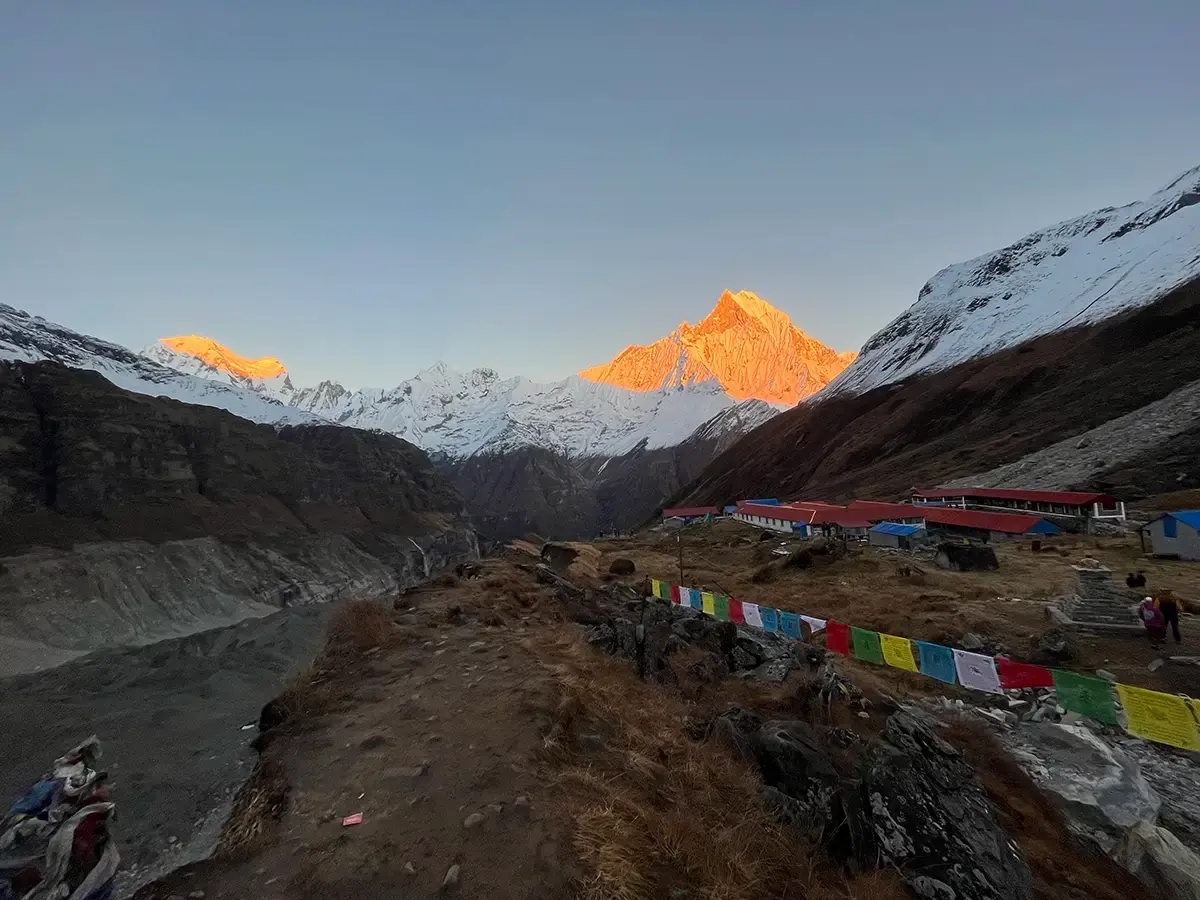
Annapurna Base Camp with Tent Peak Climbing

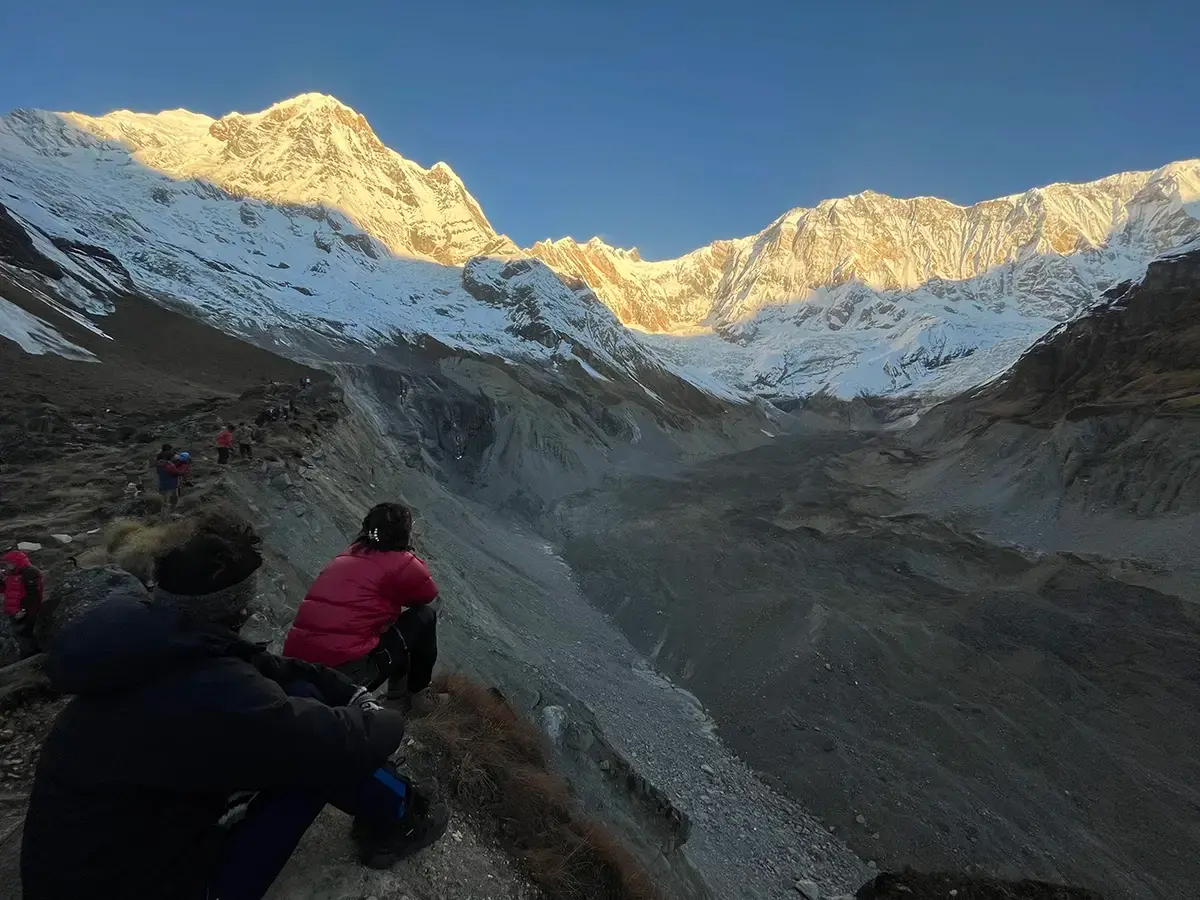
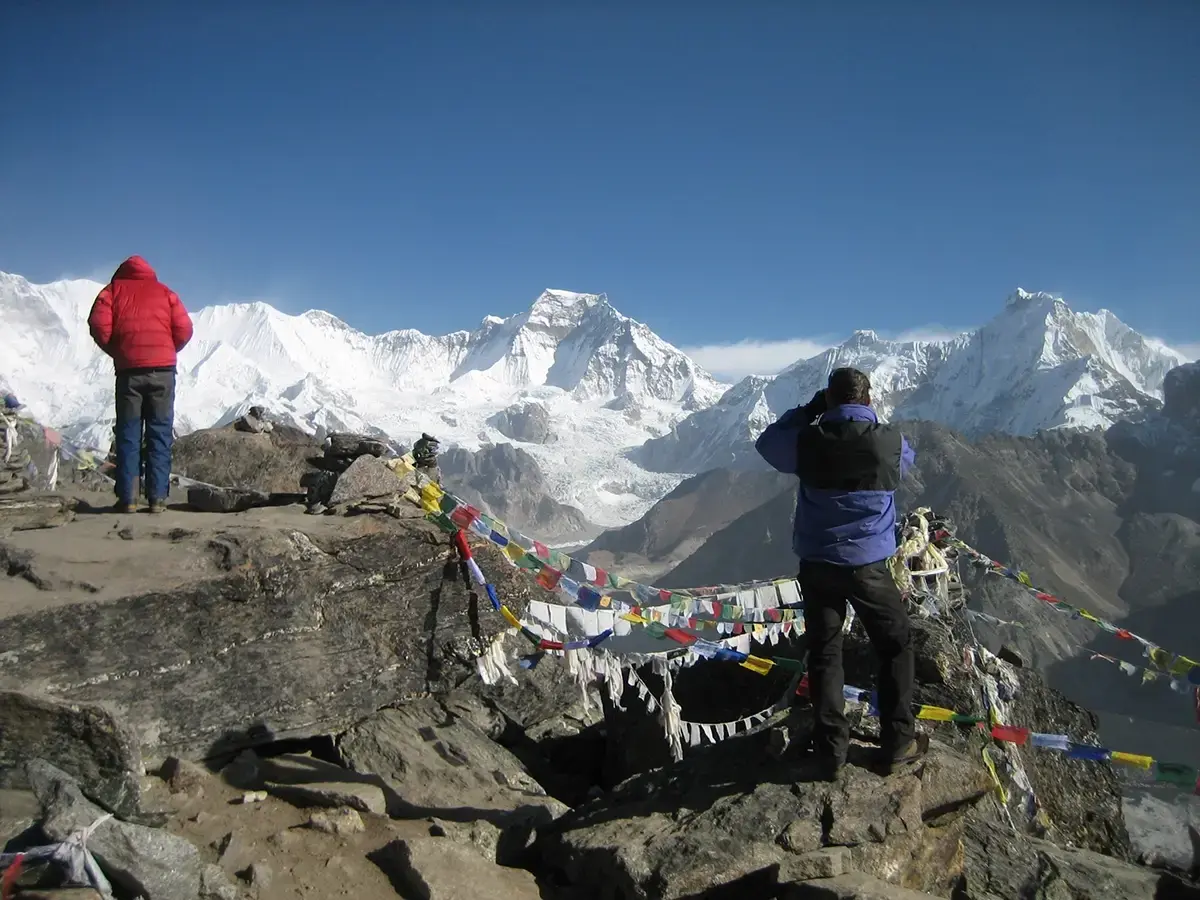
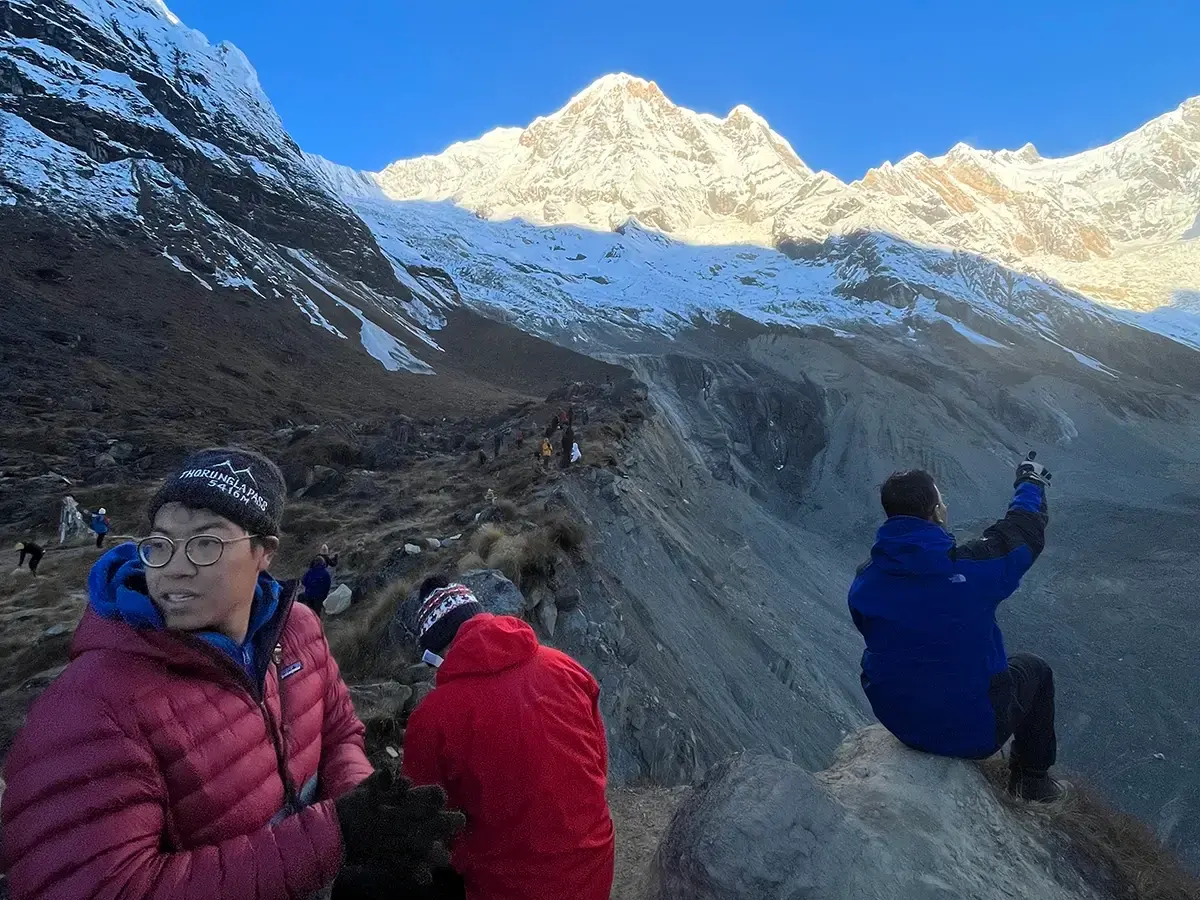
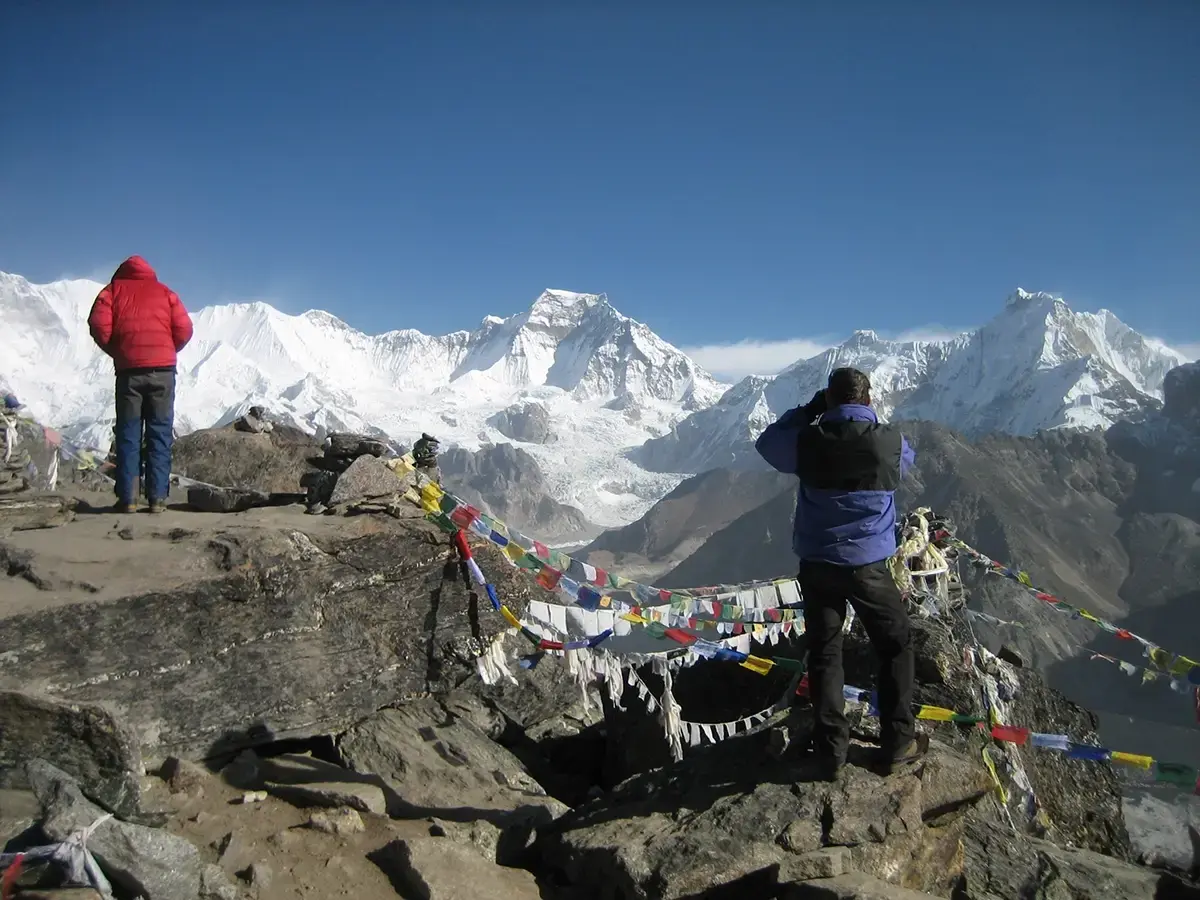
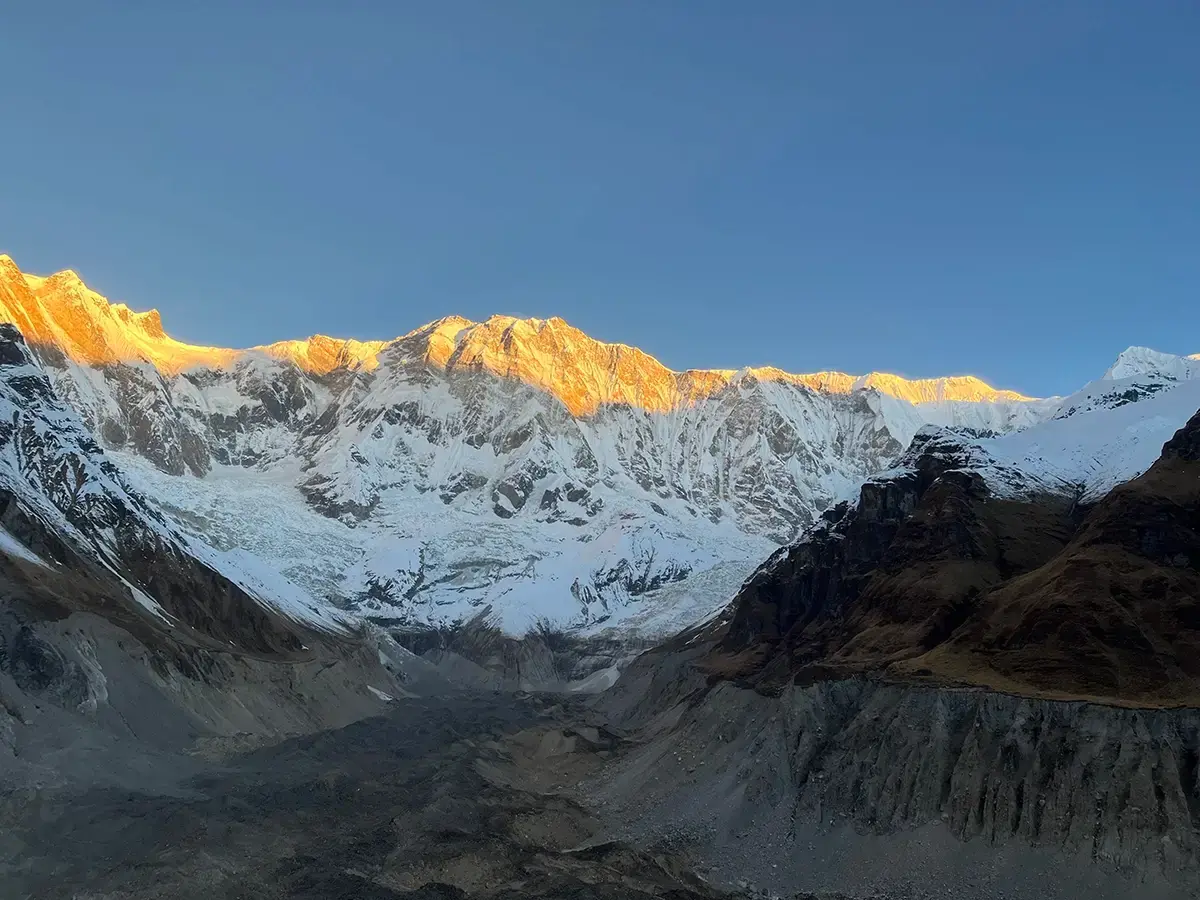
The Annapurna Base Camp Trek with Tent Peak (Tharpu Chuli) Climbing is the ultimate upgrade to Nepal’s most beloved trekking route. This journey doesn't just take you to the base of the giants; it places you on a summit in the very center of the Annapurna Sanctuary. Experience a 360-degree theater of 7,000 and 8,000-meter peaks, including Annapurna I, South, and Machhapuchhre, before testing your mettle on the glaciated slopes of Tent Peak.

Duration
16 Days
Trip Grade
Strenuous / Alpine Climbing
Maximum Altitude
5,663 meters
Starts
Kathmandu
Ends
Kathmandu
Group Size
Up to 12 Pax (Standard)
Best Time
Spring (March to May) and Autumn (September to November)

Trekking the Annapurna Base Camp and Tent Peak demands a specific rhythm. Your adventure typically begins in the humid sub-tropical forests and traverses toward the world of vertical ice walls.

Following this Himalayan rhythm on the 16-day Annapurna Base Camp and Tent Peak Climbing adventure, you will not only witness the sanctuary's breathtaking beauty but also conquer its heart. Different from the standard ABC treks that stop at the moraine, you will travel further to the summit of Tharpu Chuli (Tent Peak). Lace up your mountaineering boots and prepare for an unforgettable adventure.

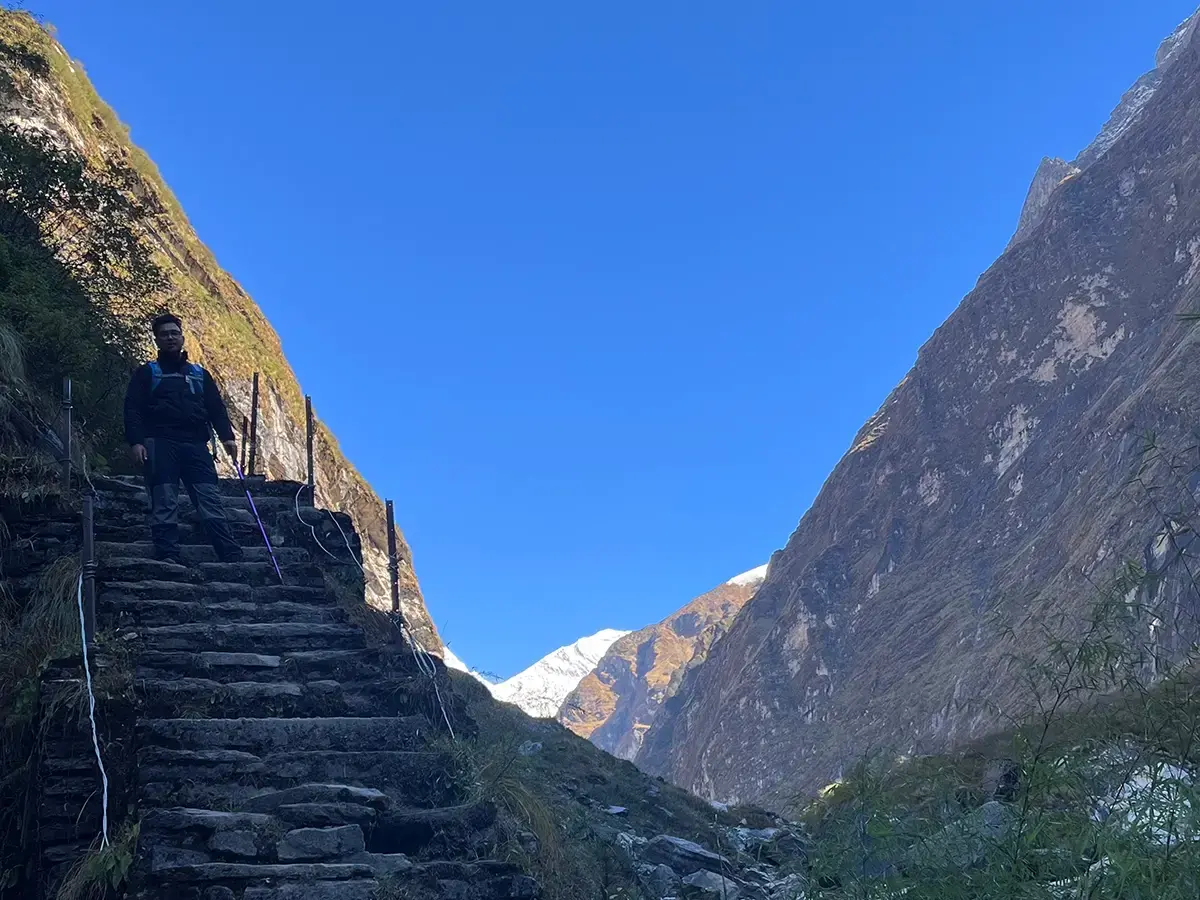
Your journey begins with a scenic drive to Pokhara. From the lake city, you will navigate the legendary 3,300 Ulleri stone steps and move through ancient rhododendron forests draped in thick moss. Watch out for the Annapurna Cough. The crisp air and thin atmosphere can dry out your throat. So, keep your buff (neck gaiter) on standby and drink plenty of ginger honey tea.

The transition from the Nepali flats (a mix of ups and downs) to the slopes above ABC is where the real adventure begins. With the help of our expert guides, you will safely push to the summit of the Tent Peak.

Ready for an aerial perspective of the Annapurna region? Book the ABC and Tent Peak expedition today. 2026/2027 slots are filling up fast.

Why Go on the Annapurna Base Camp and Tent Peak Climbing?

While thousands reach the Annapurna Base Camp, only a handful look up at Tent Peak and decide to climb it. This journey offers a rare perspective of the Himalayas that standard trekkers never see.

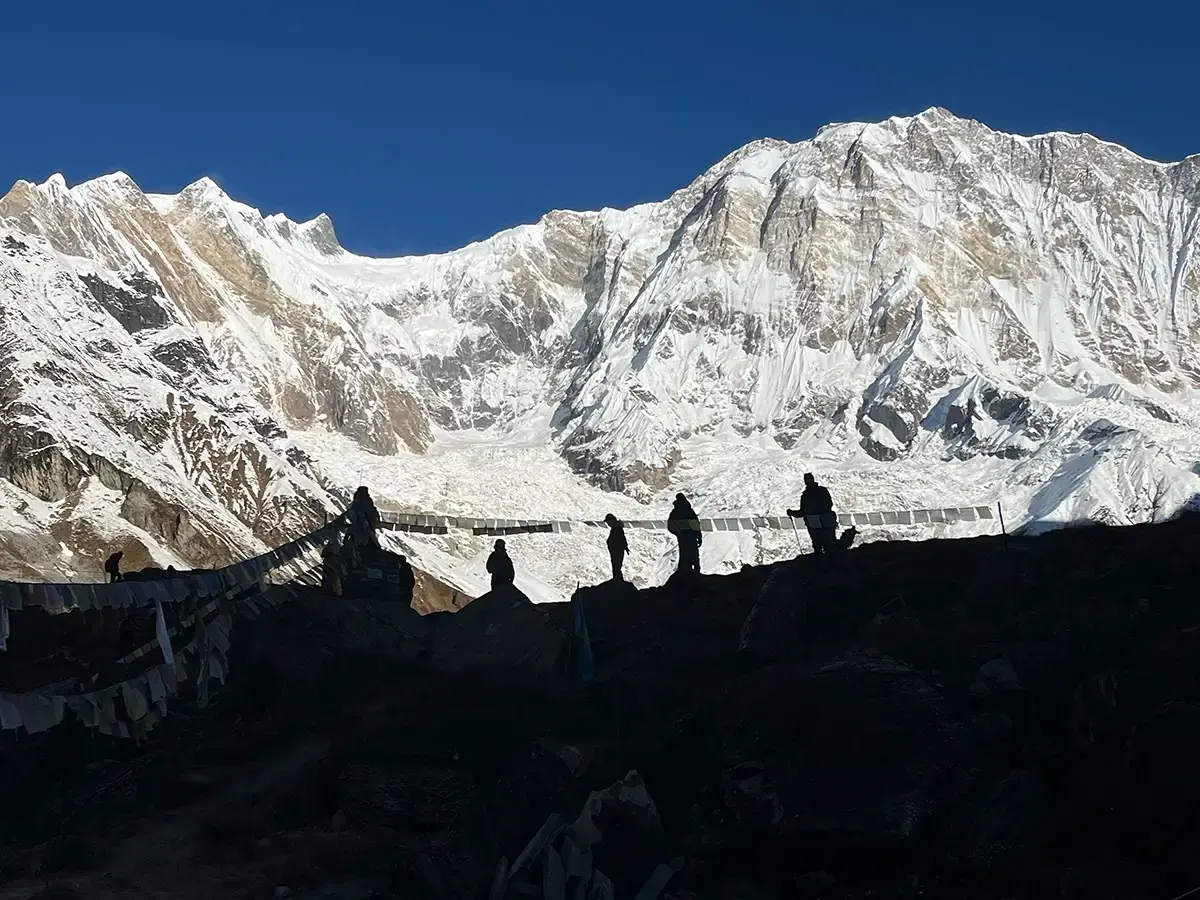
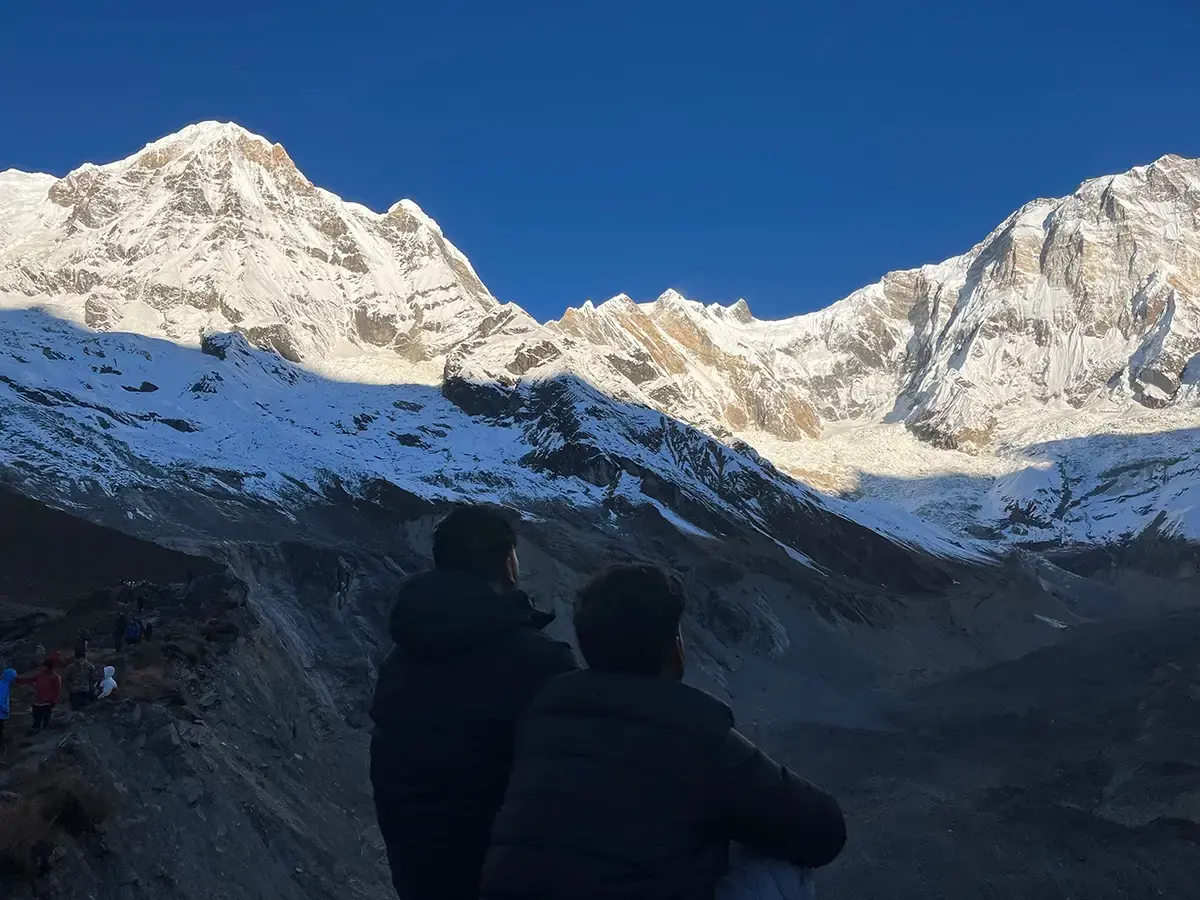
The Ultimate Amphitheater View: Standing at the center of the Annapurna Sanctuary is impressive, but standing 1,500m above it on Tent Peak is life-changing. You are surrounded by a wall of peaks, including Annapurna I, III, South, and the "Fishtail" Machhapuchhre.

Introduction to Mountaineering: Tent Peak is an ideal "Entry-Level" climbing peak. It provides the thrill of using ropes, ice axes, and crampons without the extreme technicality of 7,000m peaks. It’s the perfect bridge between high-altitude trekking and technical climbing.

The Cultural Transition: You walk through the heart of Gurung culture. From the ancient tea houses of Ghandruk to the high-altitude shepherd camps, you experience the evolution of Himalayan life. Pro tip: Always pass Mani walls from the left to respect local traditions.

Post-Climb Recovery at Jhinu Danda: Nothing heals sore climbing muscles like the natural riverside hot springs of Jhinu Danda. It is the ultimate reward after the grueling summit push, allowing the mineral-rich waters to rejuvenate you before the journey back to Pokhara.

A Typical Day during the Annapurna Base Camp and Tent Peak Climbing

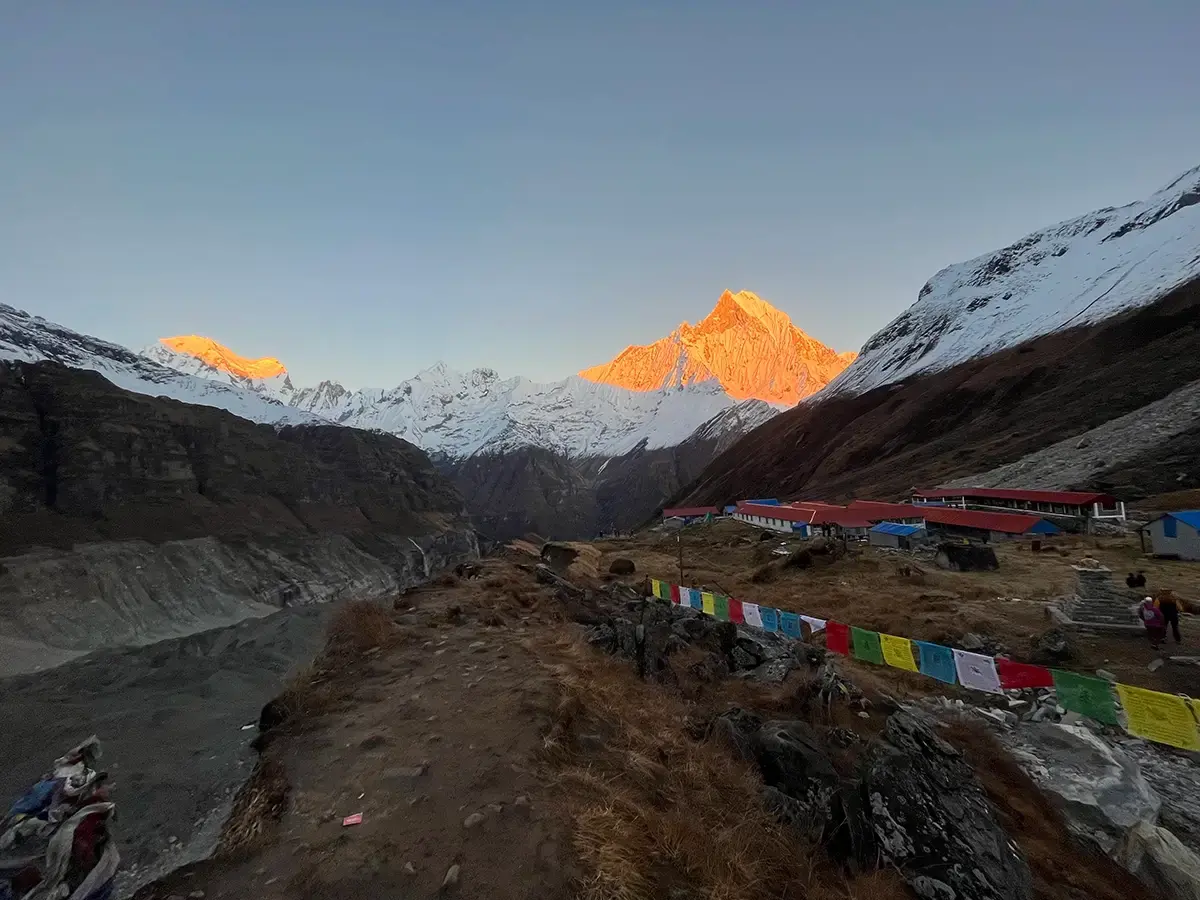
Your mornings begin early. You will wake up to the scratch of a match as the kitchen crew lights the Bhukari to serve you a hot cup of ginger tea to cut through the chilly air. Next, you can head out for breakfast, relishing sunrise views over Machhapuchhre.

By 7:30 AM, you hit the trails. The early start is crucial to avoid the afternoon heat. On the trek, you will pass mule trains carrying supplies—Pro tip: Always stay on the "mountain side" of the trail when animals pass to avoid being bumped toward the edge. At around midday, you will stop for the essential “Dal Bhat Power” at a local teahouse. The afternoon treks are usually shorter. You will reach your overnight destination by 4:00 PM.

Once you transition to the tented camp above ABC, the atmosphere shifts. You will participate in “gear checks” and rope drills. At the end of each day, your oxygen level is monitored to ensure your safety.

The day ends as you huddle in the dining tent around a warm Bhukari (stove). Share stories and personal experiences with your fellow travelers, sipping garlic soup, a blood-thinning soup that the locals swear by.

On the summit day, you prepare to navigate the rugged terrain, usually around midnight or 1 AM. The technical “Alpine Start” moves forward with the help of headlamps. By sunrise, you will be standing on the summit, looking down at the clouds.

Annapurna Base Camp and Tent Peak Climbing: Logistics, Permits, and Climbing Costs

Managing the ABC and Tent Peak involves complex logistics. Our travel experts have meticulously crafted a seamless package that includes all necessary logistics. The cost of the expedition depends on various factors, including group size, trekking days, and number of participants, etc.

Our package comes with the Annapurna Conservation Area Project (ACAP) permit, the TIMS card, and the specific Tent Peak Climbing permit from the NMA. We further handle all camping equipment, including North Face or equivalent tents, kitchen gear, and high-altitude climbing ropes.

Annapurna Base Camp and Tent Peak Highlights 2026/2027

  • Summit Tent Peak (Tharpu Chuli) at 5,663m for unparalleled 360-degree views.
  • Trek through the world-famous Annapurna Sanctuary, a natural mountain amphitheater.
  • Watch the sunrise over the Dhaulagiri and Annapurna massifs from Poon Hill.
  • Master basic mountaineering skills: crampon work, rope maneuvers, and ice axe self-arrest.
  • Relax in the natural riverside hot springs at Jhinu Danda.
  • Explore the vibrant Gurung villages of Ulleri, Ghorepani, and Chhomrong.
  • Enjoy the lakeside serenity of Pokhara before and after your mountain journey.

Customized Annapurna Tent Peak Experience

The Annapurna Base Camp with Tent Peak Climbing is a demanding expedition. However, Adventure Trek in Himalaya offers customizable itineraries to fit your pace. Whether you want to add extra acclimatization days at Machhapuchhre Base Camp, upgrade to a private vehicle for the Pokhara-Kathmandu travel, or include a few days of luxury in Pokhara after the trek, we can tailor the journey to fit your requirements.

Share your mountaineering experience with our experts, and we will adjust the technical training days to suit your skill level.
Annapurna Base Camp with Tent Peak Climbing Itinerary

Day 1

Arrival in Kathmandu and Transfer to Hotel

Your ABC with Tent Peak excursion begins upon arriving at the Tribhuvan International Airport in Kathmandu. Upon arrival, our representatives will welcome you and help transfer you to your hotel. In the evening, you can head out to the vibrant bars in the tourist hub of Thamel or pick up any last-minute essentials like extra socks or a local SIM card.

Max Altitude: 1,400 meters
Meals: Null
Duration: 1 hour transfer
Accommodation: Null
Day 2

Meeting with Guide and Last Minute Preparation

As you spend the day preparing for the trek and inspecting your gear, our travel experts ensure all your permits and essentials are in place. Throughout the day, you will engage in preparing and packing. This is your final opportunity for last-minute shopping. Ensure your boots are crampon-compatible. If not, you can head to a rental shop in Thamel.

Your guide will also conduct a final briefing on altitude safety and climbing protocol.

Max Altitude: 1,400 meters
Meals: Breakfast
Duration: Full day
Accommodation: Null
Day 3

Drive to Pokhara

A luxurious tourist bus takes you to the “City of Lakes”. The drive follows the Trishuli River, offering glimpses of rural life. Upon reaching Pokhara, you can enjoy a quiet stroll by the Phewa Lake.

Don’t tire yourself tonight; the real trek begins tomorrow.

Max Altitude: 822 meters
Meals: Breakfast, Lunch, and Dinner
Duration: 6–7 hours drive
Accommodation: Hotel
Day 4

Drive to Birethanti and Trek to Ulleri

To get to the trailhead, you will take a short ride from Pokhara. Today, the challenging 3,300 stone steps of Ulleri await. “Bistarai” (slowly) is the key to a successful ascent. Focus on the steady Annapurna rhythm rather than speed. This saves your knees for the climbing days ahead.

Pro Tip: There is a rough road that now goes all the way to Hile or even Tikhedhunga. This avoids 3 hours of walking on a dusty jeep road, saving your knees for the 3,300 steps of Ulleri that follow immediately after.

Max Altitude: 1,950 meters
Meals: Breakfast, Lunch, and Dinner
Duration: 1.5 hr drive; 5 hours trek
Accommodation: Teahouse/Lodge
Day 5

Trek to Ghorepani Village

Today’s journey winds through beautiful oak and rhododendron forests. If you’re traveling in spring, you will find the entire hillside engulfed in shades of red and pink. The trail further crosses small streams and waterfalls before reaching the blue-roofed houses of Ghorepani, a historic stop for ancient salt traders.

Max Altitude: 2,885 meters
Meals: Breakfast, Lunch, and Dinner
Duration: 6 hours
Accommodation: Teahouse/Lodge
Day 6

Morning Hike to Poon Hill and Trek to Tadapani

Your trek begins with a pre-dawn hike to the vantage point of Poon Hill. Enjoy the mesmerizing sunrise over the Dhaulagiri and Annapurna massif. After breakfast, you enter deep forests where you can spot Langur monkeys and other exotic wildlife.

Max Altitude: 3,210m
Meals: Breakfast, Lunch, and Dinner
Duration: 6 hours
Accommodation: Teahouse/Lodge
Day 7

Trek Tadapani to Sinuwa

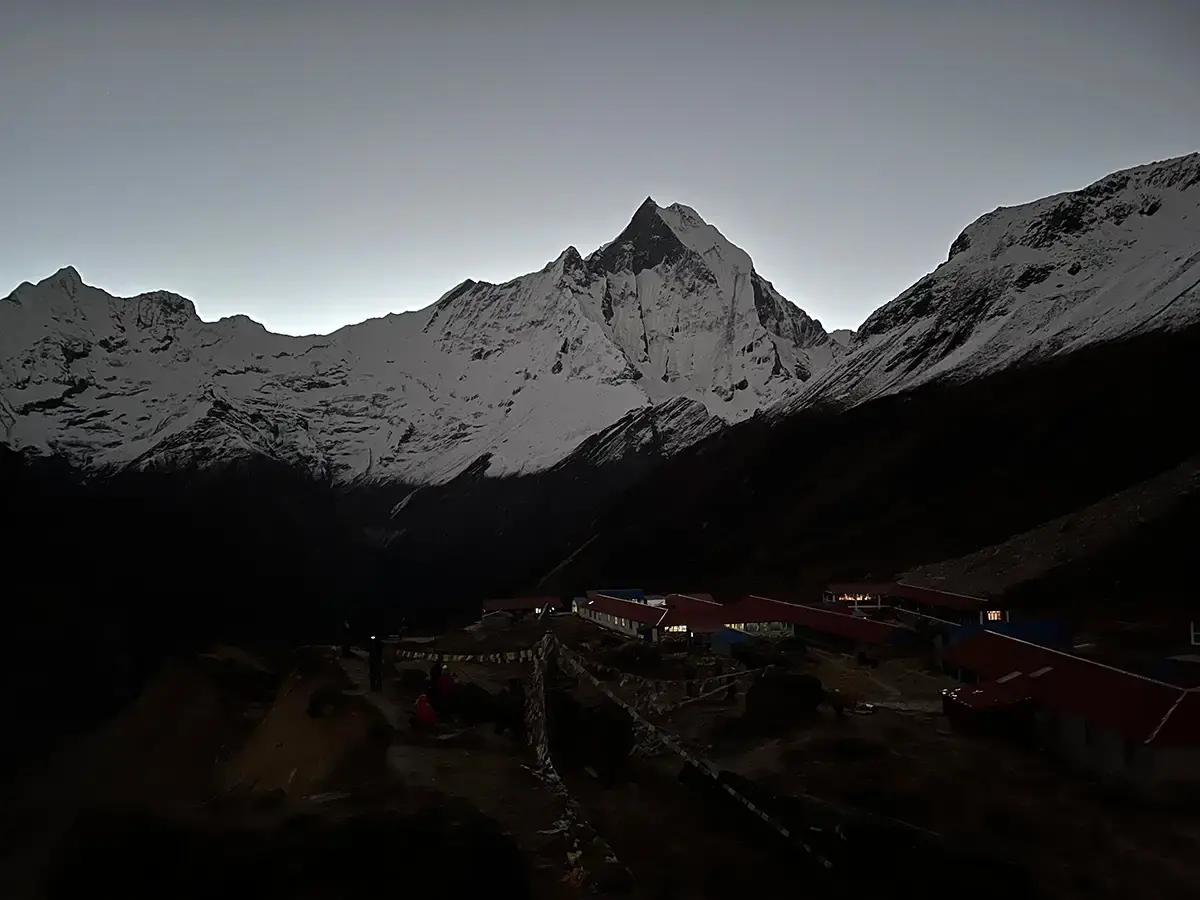
From Tadapani, the trail descends steeply to the Kimrong Khola and then climbs back toward Chhomrong, the gateway to the Annapurna Sanctuary. After a quick lunch in Chhomrong, you will descend further before climbing to Sinuwa, your overnight destination, offering a great view of the “Fishtail” peak.

Max Altitude: 2,340 meters
Meals: Breakfast, Lunch, and Dinner
Duration: 6 hours
Accommodation: Teahouse/Lodge
Day 8

Trek to Deurali

Today, you pass the 3,000-meter mark. Notice the vegetation change from lush forest to bamboo and scrub. The trail passes the “Hinku Cave.” You will need to move carefully through the "Avalanche Funnel" between Deurali and MBC.

Max Altitude: 3,230 meters
Meals: Breakfast, Lunch, and Dinner
Duration: 5 hours
Accommodation: Teahouse/Lodge
Day 9

Trek to Annapurna Base Camp via MBC

You enter the Annapurna Sanctuary today. The journey passes through Machhapuchhre Base Camp before revealing the massive bowl of peaks. Find yourself in the center of a natural amphitheater surrounded by vertical walls of rock and ice.

Max Altitude: 4,130 meters
Meals: Breakfast, Lunch, and Dinner
Duration: 5 hours
Accommodation: Teahouse/Lodge
Day 10

Trek to Tent Peak Base Camp

Away from the comfort of the lodges, you move onto the Annapurna South Glacier. You will cross the moraine and settle into your first tented camp. Observe the silence of the vast Annapurna as you rest and acclimatize. Even in such a wilderness, you can find freshly cooked meals prepared by our climbing crew.

Max Altitude: 4,450 meters
Meals: Breakfast, Lunch, and Dinner
Duration: 4-5 hours
Accommodation: Tented Camp
Day 11

Hike to Tent Peak High Camp

Today’s trek takes you to a steeper and more technical terrain. You climb onto the ridge to the high Camp. This is your jumping-off point for the summit. In the afternoon, you practice “fixed rope” maneuvers and polish your climbing skills before the ultimate summit push.

Max Altitude: 5,200 meters
Meals: Breakfast, Lunch, and Dinner
Duration: 4 hours
Accommodation: Tented Camp
Day 12

Summit Tent Peak and Return to Base Camp

You have reached the pinnacle of your expedition. You start at midnight with the help of technical climbing gear and a headlamp. The climb involves crossing a glacier and a steep final snow slope, about 45 to 50 degrees.

Upon reaching the summit, you will find yourself standing at the center of the Annapurna massif. After photos and celebration, you descend carefully back to Base Camp.

Max Altitude: 5,663 meters
Meals: Breakfast, Lunch, and Dinner
Duration: 9-10 hours
Accommodation: Tented Camp
Day 13

Trek to Annapurna Base Camp

Leaving the high camp behind, you will retrace your steps back to the ABC lodges. A warm bed and celebratory meal await you. Enjoy the lower altitude of the Annapurna Base Camp after a grueling Tent Peak climb.

Max Altitude: 4,130 meters
Meals: Breakfast, Lunch, and Dinner
Duration: 4 hours
Accommodation: Teahouse/Lodge
Day 14

Base Camp Trek back to Bamboo

Today involves a long descent. But the heavy air of the lower altitudes makes it easier on your lungs. Retracing your path, you reach your overnight destination in Bamboo. You will have descended nearly 2,000 meters in a single day. Get yourself much-deserved rest.

Max Altitude: 2,300 meters
Meals: Breakfast, Lunch, and Dinner
Duration: 6 hours
Accommodation: Teahouse/Lodge
Day 15

Trek to Jhinu Danda (Hot Springs)

After a few hours of walking, you will reach Jhinu. After checking into the lodge, you can head down to the riverbank. The natural hot springs are the perfect therapy for your legs. It’s a moment of pure bliss after the hardships of the climb.

Max Altitude: 1,700 meters
Meals: Breakfast, Lunch, and Dinner
Duration: 5 hours
Accommodation: Teahouse/Lodge
Day 16

Trek to Nayapul and Drive to Pokhara

A final walk from Jhinu Danda takes you across a long suspension bridge and back to the road head. A private vehicle will take you back to Pokhara. Cheers with your fellow trekkers at one of the lakeside bars to celebrate the success of your Annapurna Base Camp and Tent Peak excursion.

Max Altitude: 822 meters
Meals: Breakfast and Lunch
Duration: 4-5 hours trek; 1.5 hr drive
Accommodation: Null
Plan Your Trip Your Way
Can't find a suitable date? No worries! Our experts will help you plan a departure date that fits your schedule and make your adventure happen at the perfect time.

Cost Details

Includes

  • Transportation: Private transfers to/from Kathmandu Airport and your hotel; Tourist bus to and from Pokhara.
  • Accommodation: Twin-sharing mountain lodges during the trek and high-quality tented camps during the climbing period.
  • Meals: 16 breakfasts, 16 lunches, and 15 dinners (Standard full-board main courses) during the journey, supplemented by seasonal fresh fruits daily.
  • Professional Staff: Government-licensed climbing leader, experienced trekking guide, and a dedicated cook/porter team for the tented camp phase.
  • Permits & Fees: Tent Peak climbing permit, Annapurna Conservation Area (ACAP) entry fee, and garbage deposit.
  • Climbing Equipment: All group gear, including ropes, ice screws, snow bars, and specialized camping equipment (kitchen tent, dining tent, toilet tent, tables, and chairs).
  • Personal Gear Support: Complimentary use of sleeping bags and down jackets if you do not have your own, plus a duffle bag for the trek.
  • Safety & Medical: Comprehensive medical kit with a pulse oximeter for daily altitude monitoring and rescue coordination.
  • Staff Welfare: Full insurance, salary, lodging, and meals for all guides, porters, and kitchen crew.

Excludes

  • Flights: International airfare to and from Kathmandu.
  • Kathmandu Stay: Hotel accommodations and meals in Kathmandu before and after the itinerary.
  • Visa Fees: Nepal entry visa ($50 USD for 30 days).
  • Personal Gear: Individual climbing hardware (boots, harness, crampons) and clothing.
  • Travel Insurance: Mandatory policy covering high-altitude helicopter rescue and medical evacuation.
  • Incidental Costs: Personal expenses such as laundry, phone calls, Wi-Fi, battery charging, hot showers, alcoholic beverages, and bottled water.
  • Tips: Gratuity for the climbing leader, guide, and porters.

Essential Information

When is the Best Time for the Annapurna Base Camp Trek with Tent Peak Climbing?

Timing is crucial for a successful Annapurna Base Camp and Tent Peak expedition. Compared to standard trekking, the window for alpine climbing is narrower. Spring (March to May) is the best time. During this season, you can traverse through the more stable snowpack. The final 45-degree push to the summit is safer under crampons under these conditions. Meanwhile, in the lower elevations, rhododendron is in full bloom, providing a surreal visual contrast to the icy above.

Autumn (October to November) is another popular season. During this time, the air is crisp, and visibility is far stretched. If you are traveling during autumn, watch out for the frigid conditions at High Camp.

To avoid the hidden crevasses and monsoon rain, we do not operate this climb during the summer months.

How Difficult is the Tent Peak Climb? Who can go on this Trek?

The Annapurna Base Camp with Tent Peak climb is a strenuous grade adventure. While the approach to ABC is a moderate trek, the transition to Tharpu Chuli involves "Grade PD" (Peu Difficile) alpine climbing. You will navigate moraine, cross a glaciated plateau, and tackle a steep snow ridge.

This expedition is suitable for:

  • Individuals who have completed high-altitude routes like Everest Base Camp or the Annapurna circuit and are ready for the “next step.”
  • Physically fit traveller who can take on 8 to 10 hours of constant ascents on rugged, icy terrain on summit day.
  • Travelers with basic endurance and the mental resilience to sleep in tented camps and follow a "slow and steady" alpine pace.

Preparations for the Annapurna Tent Peak: Necessary Gear Checklist

Climbing a 5,000m peak requires a blend of trekking comfort and technical safety. Ensure your gear is tested before you arrive in the Sanctuary.

Head & Hands

  • UV-Protection Glacier Glasses (Category 4)
  • Headlamp with extra batteries (essential for the 1:00 AM alpine start)
  • Woolen beanie and a buff to prevent the "Annapurna Cough."
  • Insulated waterproof climbing gloves + lightweight liner gloves

Body and Lower Body

  • Moisture-wicking base layers (merino wool is best for odor control)
  • Hardshell waterproof jacket and trousers
  • High-loft down jacket (rated for -15°C/5°F)
  • Trekking trousers and thermal leggings

Footwear and Climbing Hardware

  • Mountaineering Boots: Crampon-compatible (B2 or B3 grade) for the summit push.
  • Trekking Boots: Comfortable, broken-in boots for the approach.
  • Technical Gear: Climbing helmet, harness, ice axe, and crampons (rentals available in Thamel or Pokhara).

Miscellaneous

  • 4-season sleeping bag
  • Trekking poles (vital for the Ulleri stone steps)
  • Water purification tablets or a Steripen
  • High-calorie snacks (energy bars and electrolytes)
  • Personal first aid kit with blister tape and Diamox (if prescribed)
Speak to an Expert
Sudarsan Naupane
Sudarsan Naupane